

Healthcare
HomeNurse
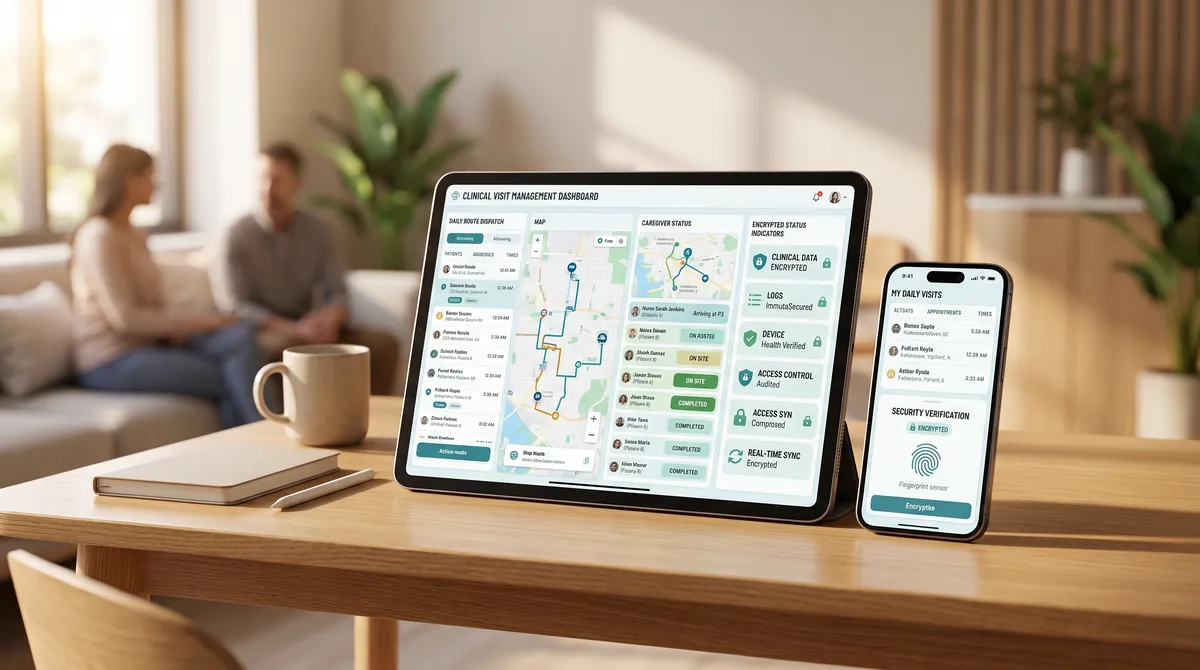
Nachi Medical Solutions, a home healthcare provider, needed a better way to manage patients, assign nurses and monitor home visits.
Outcome: The organisation runs its home-care operation on one digital platform.
Healthcare
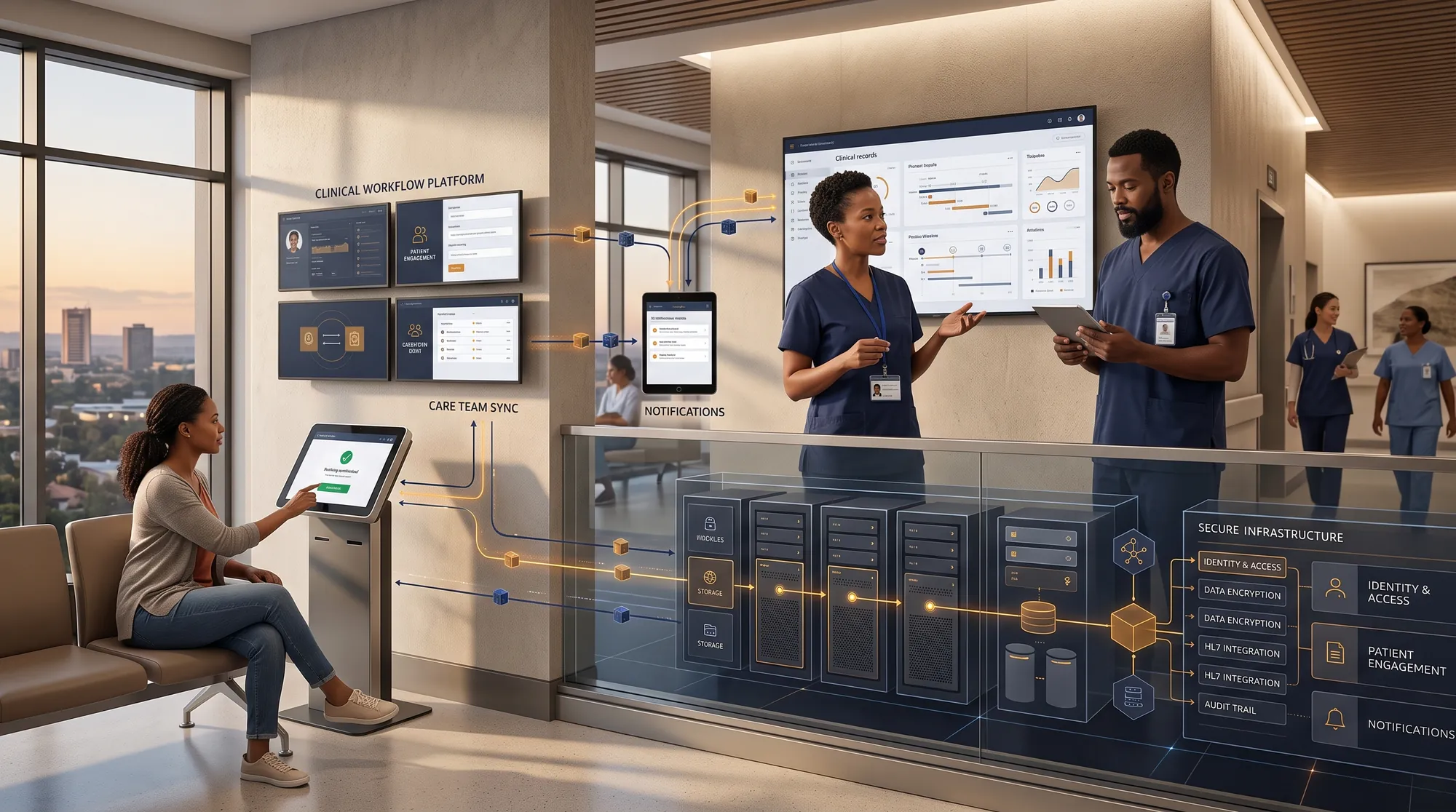
We build patient management, practitioner workflow, appointment, records and reporting systems for clinics, practices and home-care providers — with POPIA, role-based access and auditability designed in from the start, and three such systems in production today.
Personal and health information is minimised, encrypted and access-controlled from the first design, with a clear responsible party and retention rules — not retrofitted before launch.
Practitioners, coordinators, administrators and finance each see only what their role needs. Access rules live in the API, not the screen, so they hold on any device.
Every action is attributable to a person and a role. Managers approve new staff before they can log in; reporting is generated from the same records the operation runs on.
Staff often sign in from personal phones outside the practice. Every account carries a second factor and short-lived sessions.
Managed AWS services mean nothing to patch and a running cost that tracks actual use — a quiet month costs almost nothing.
Built for variable connectivity, paper-to-digital transitions and teams without an IT department.
Start with the HomeNurse case study — the decisions behind a home-care platform built for Nachi Medical Solutions.
Healthcare
Nachi Medical Solutions, a home healthcare provider, needed a better way to manage patients, assign nurses and monitor home visits.
Outcome: The organisation runs its home-care operation on one digital platform.

Healthcare
A healthcare practice needed its day-to-day clinical operations on one dependable system.
Outcome: In production for the practice.
Healthcare
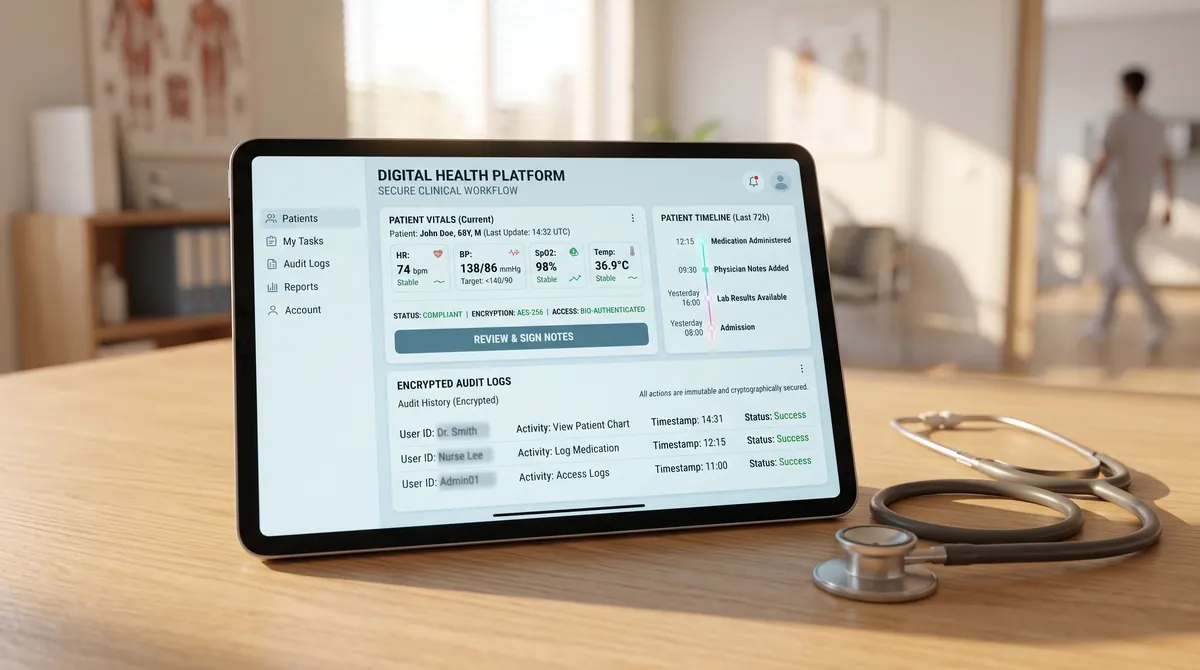
A clinic needed patient records, appointments and admin in one place instead of on paper.
Outcome: In daily use at the clinic.
Every project is scoped around the problem, the requirements and the outcomes first; we then provide a written proposal based on the work required. We don't publish standard prices — a home-care platform and a single-clinic booking system are not the same project.
In practice: collect only the personal information the operation needs, control who can see it through roles enforced on the server, keep every action attributable to a person, secure it in transit and at rest, and have a responsible party who can answer for it. We design all of this in from the first architecture diagram rather than retrofitting it before launch.
In your own AWS account, in AWS's Cape Town region (af-south-1), encrypted at rest and in transit. You own the account and the data; access goes through role-based permissions and multi-factor authentication.
No. We build on managed, serverless AWS services, so there are no servers to patch, and we set up monitoring and alerting so problems surface to us before they surface to you. Ongoing support is available on a retainer.
Usually, yes — we start by assessing what's in place and integrate or migrate rather than forcing a big-bang replacement. Where a system should be kept, we keep it.
Tell us about the operation and the data. We'll help you work out the right approach.
Talk to an engineer